Outlet, Switch & GFCI Installations
Keep your family safe and power accessible. From safety GFCI outlets in wet zones to modern USB-C integrated plugs and dimmer switches, we troubleshoot and swap devices cleanly.
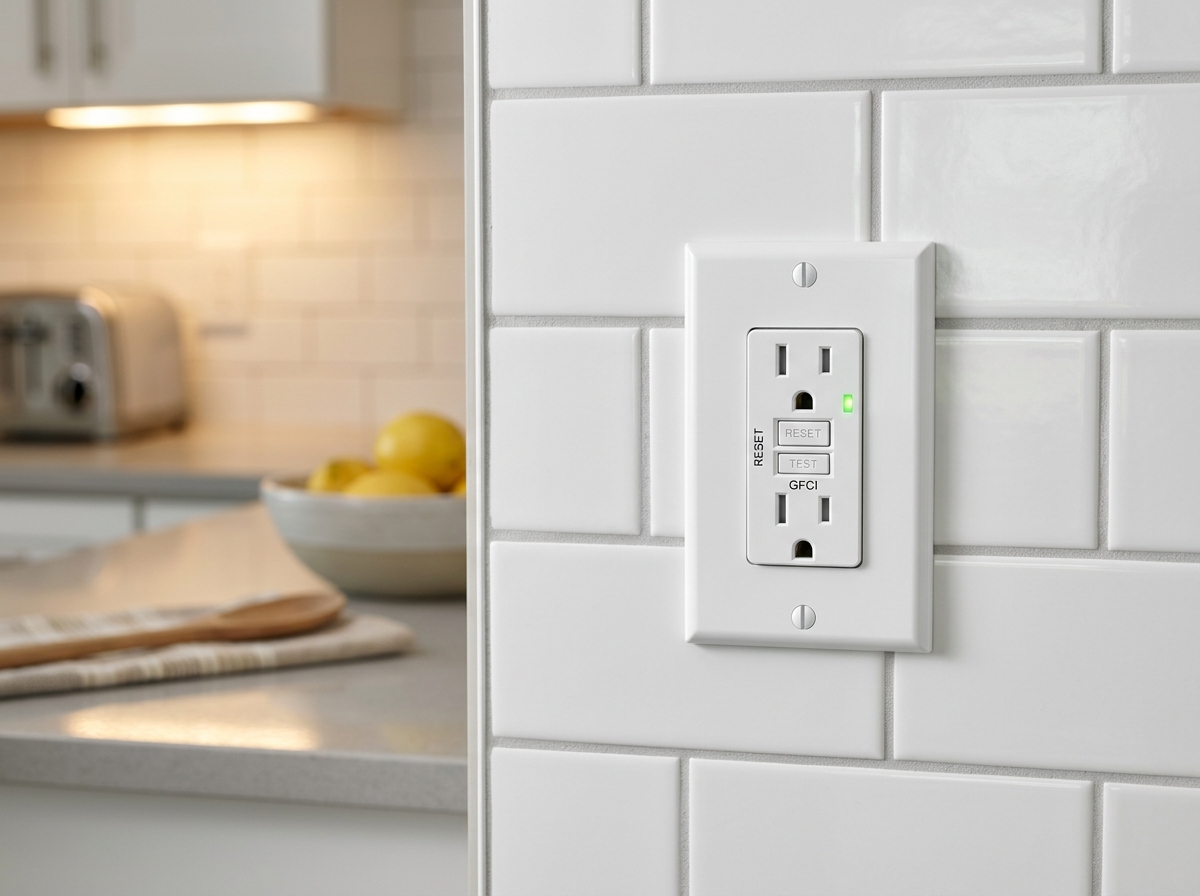
Crucial Safety: What is a GFCI Outlet?
A Ground Fault Circuit Interrupter (GFCI) outlet is a specialized safety device designed to cut power within milliseconds when it detects an electrical current flowing along an unintended path (such as through water or a person). California building codes strictly mandate GFCIs in areas where water is present, protecting occupants from fatal shocks. Standard outlets carry no protection, risking severe injury if water makes contact.
California Code GFCI Placement Mandates
According to the latest National Electrical Code (NEC) guidelines enforced across California, GFCI protection is strictly required in the following locations:
- Kitchen Countertops: All receptacles serving countertop surfaces, particularly those within 6 feet of the kitchen sink.
- Bathrooms: All outlets without exception, to prevent electrocution near tubs, sinks, and showers.
- Garages & Basements: Unfinished utility zones where concrete floors touch ground potential.
- Outdoor Receptacles: All outdoor plugs, including pool decks, gardens, and patios. Must have weatherproof cover enclosures.
- Wet Bars & Laundry Rooms: Any outlet within 6 feet of laundry tubs, wet bar sinks, or water lines.
If your older home still uses standard non-GFCI three-prong plugs in these areas, you are in direct violation of building codes and lack modern safety protections.
Modern Device Upgrades We Offer
We do more than swap broken plugs; we upgrade your home's energy accessibility with clean, modern hardware designs:
- Integrated USB & USB-C Outlets: Upgrade living room and bedside receptacles with built-in high-speed charging ports, eliminating bulky wall adapters.
- Smart Outlets: Control plugged-in appliances, lamps, or holiday lights via smart home scheduling apps or voice commands.
- Child Safety Tamper-Resistant Outlets (TR): Built-in internal shutters prevent kids from inserting keys, forks, or paperclips into slots, avoiding accidental shocks. TR outlets are now code-required for all residential replacements.
- Dimmer & Smart Switch Swaps: Replace traditional toggle switches with modern slide dimmers or smart Wi-Fi switch controllers.
Troubleshooting Failing Outlets & Switches
Outlets and wall switches contain physical copper contacts that wear down over time. Call us if you notice these warning signs:
- Plugs Falling Out: Loose internal receptacles cause arc faults, generating extreme heat behind the wall.
- Warm Outlet Cover Plates: Covering plates should never feel warm to the touch. This indicates a wiring connection is coming loose and drawing dangerous resistance.
- Sizzling or Crackling Sounds: Swapping a switch or plugging into an outlet should be silent. Noise indicates electricity jumping across gaps, creating fire hazards.
Step-by-Step Replacement & Wiring Workflow
Replacing receptacle devices requires strict adherence to safety protocol to guarantee code compliance:
- Circuit Shut-off & Verification: We turn off the matching breaker and test the outlet using a digital voltage tester to verify the box is 100% dead.
- Box Inspection: We remove the cover and check the condition of the wires. We verify that ground wires are present and properly connected.
- GFCI Line/Load Diagnostics: For GFCI units, we identify the "Line" (incoming hot) and "Load" (downstream out) lines to ensure that all outlets further down the circuit are also safely protected.
- Secure Terminal Connection: We wire the device using the screws (not the push-in back holes, which frequently fail), wrap the terminals in electrical tape for insulation, and seat the switch neatly inside the wall box.